Eset Nod32 antivirus

Wednesday, February 9, 2011

Latest Cellphones 2011..


Latest Cellphones 2011..

Motorola Backflip is designed with a reverse flip form that makes it easy to watch videos, listen to music and view photos, while the QWERTY keyboard lets users type emails, texts, news feeds, social network messages more easily. The Backflip combines social networking with smartphone features .
motorola backflip new
Motorola Backflip features includes Reverse flip design transforms the Backflip

HTC Desire, the most powerful Android cell phone of the manufacturer to date has finally arrived. At 3.7-inches the WVGA LCD is one of the most advanced displays available on the market today, to view photos and videos and browse the Web
HTC Desire
The Desire runs HTC Sense for a customized seven-panel home screen.

The Samsung Galaxy S 4G will be available on T-Mobile network later this month. This Android smartphone may retail for $150 on a two-year contract. As a reminder, the Samsung Galaxy S 4G comes equipped with a 4-inch touchscreen display, a 1GHz Hummingbird processor and a 5-megapixel camera that can record High Definition video in 720p. Additional specs include a front facing camera for video chat and a microSD card slot. Each purchase comes bundled with a free 16GB microSD card.

Sprint and Kyocera Communications have proudly introduced the first dual-touchscreen Android smartphone, the Kyocera Echo. This Android-powered smartphone features two high-resolution 3.5-inch WVGA touchscreen displays connected by a patent-pending “pivot hinge” that enables the two displays to operate independently, side-by-side or combined to form an oversized 4.7-inch (diagonally) integrated display. In its closed position, the Kyocera Echo is a pocket-friendly, single-display smartphone. When opened, the Echo reveals a revolutionary new platform for wireless multitasking and provides users a new level of versatility in Android. The Kyocera Echo also has a 1GHz processor, the Google Android 2.2 OS, a 5MP camera with 720p video capabilities and 3G. Folks in the US will be able to purchase this smartphone for around $199.

Here’s the first leaked image of the upcoming Nokia E6 (aka Nokia E6-00) QWERTY smartphone. Based on the informations we got, the handset will sport an 8.0-megapixel camera with dual LED flash at the back, a front-facing VGA camera, a physical QWERTY keyboard and run on Symbian OS. The Nokia E6 itself is expected to make its debut at this year’s MWC.

Sunday, February 6, 2011

World of tablets comes in 2011


Apple iPad 2011 – “The Daily” will be introduced on Groundhog Day

Apple-iPad-2011

Media magnate Rupert Murdoch, owner of The Times (among other media) and a great supporter of paying online for information during recent years, will introduce his latest digital project The Daily on February 2. That is his first online newspaper, which is specifically designed for iPad.


The Galaxy is much lighter than the iPad, and come with delicious speed and highly refined hardware.

Samsung Galaxy Tab


The Galaxy Tab from Samsung is one of the few real competitors to Apple’s iPad. It runs on Google’s Android 2.2 operating system, with superior — turn-by-turn navigation, voice dictation, Flash support — that either costs extra on the iPad or are not available at all. The biggest drawback of the Galaxy may be its price: $600. You could buy two netbooks for that money, or four Kindles — or one 32-gigabyte iPad, with its much larger screen, aluminum body and much better battery life.

Device

Samsung Galaxy Tab

Compared to the Apple iPad

Operating System

Android

iOS

Apps

More than 100,000 Android apps

40,000+ iPad apps through the Apple App Store; 300,000+ compatible iPhone apps

Flash Support

Yes

No

Multitasking

Yes

Yes, with the newest iOS upgrade

Screen

7" wide screen TFT LCD

9.7\'\' 4:3 IPS screen

Screen Resolution

1024 x 600

1024 x 768

Camera

1.3MP camera for videoconferencing, 3MP camera on reverse side

None

Ports

U.S.B.

Apple dock connection

Navigation

Compass, GPS

Compass, assisted GPS (3G version only)

Storage

MicroSD card slot (16GB pre-installed)

16, 32 or 64 GB

Wireless

Wi-Fi, Bluetooth, 3G

Wi-Fi, Bluetooth, 3G (some models)

Estimated Battery Life

7 hours

10 hours, 1 month standby

Dimensions

7.48" x 4.74" x 0.47"

9.56" x 7.47" x 0.5"

Weight

0.8 pounds

1.5 pounds

Wireless Plan

Varies by carrier

$15 or $25 a month via AT&T (No contract)

Price

$600 ($400 with contract)

$500-$830

The Big Guys

Motorola Xoom

motorola-xoom-tablet-homescreen-ces-2011

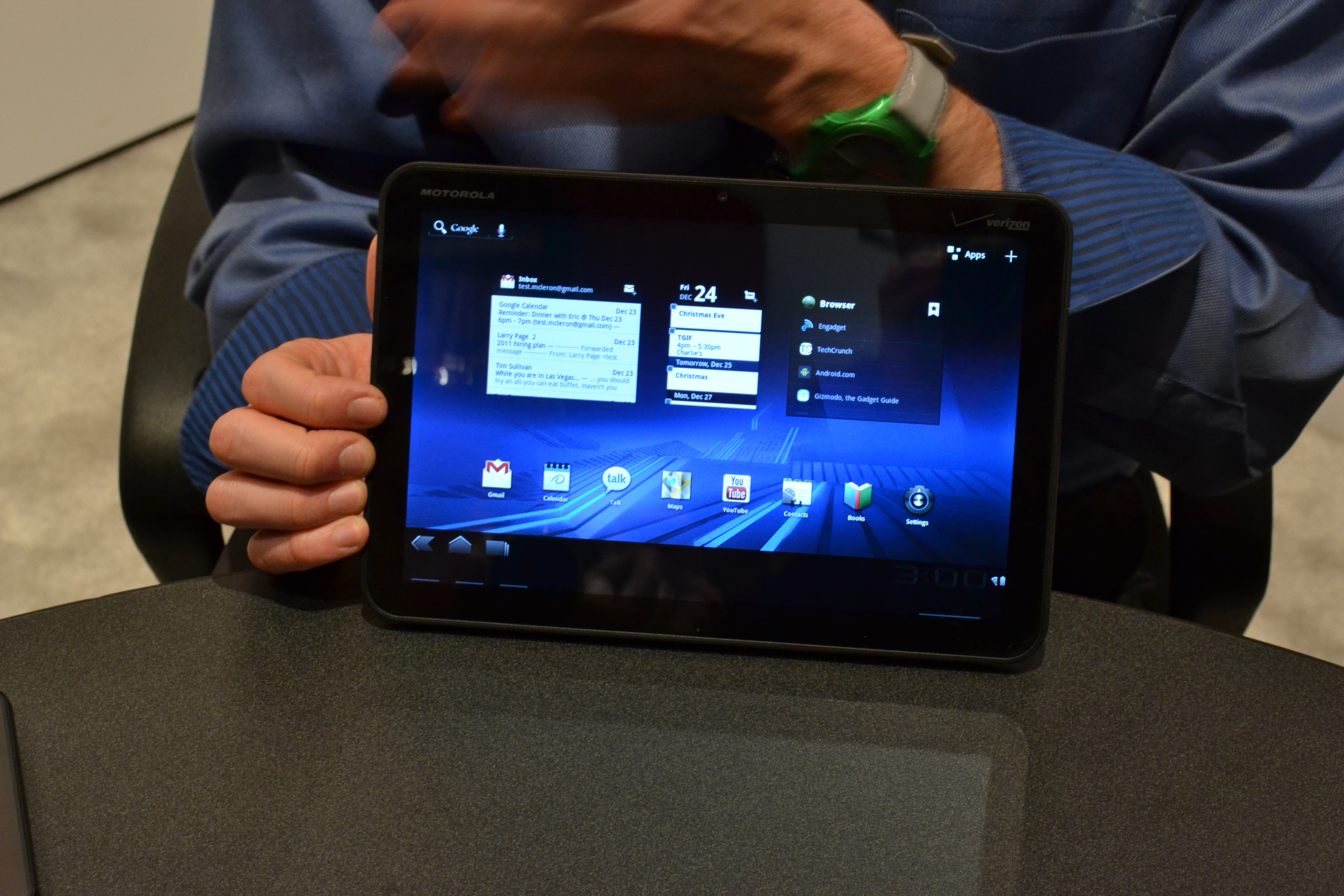
The Motorola Xoom is our favorite tablet of the show. With a 10.1-inch screen, hot new 1GHz Nvidia Tegra 2 dual-core processor, and running Google’s upcoming Android 3.0 (Honeycomb), the Xoom was the most complete package of any tablet on display. Motorola’s Droid provided the first good alternative to the iPhone last year, and the manufacturer may repeat history. The Xoom appears to have everything it takes to challenge the dominance of the iPad in the tablet space. It will be a Verizon exclusive at launch in the first quarter, and swappable modems will make it upgradeable to 4G later this year. Time will tell if the final device can match its CES presence. Click here to read our full impressions of the Xoom.

BlackBerry PlayBook

The BlackBerry PlayBook entered CES an underdog, but left as one of the hot items of the show. Like the Xoom, this tablet packs a dual-core processor and a full gigabyte of RAM, but it is no Android or BlackBerry device. Instead, RIM has chosen to size the PlayBook a leaner 7-inches, hoping to capitalize on a smaller tablet market not filled with the iPad. Though we weren’t terribly awed by the size (10 inches seems more practical), the new BlackBerry Tablet OS (powered by QNX) is pretty impressive. It feels reminiscent of Palm’s WebOS, but the PlayBook takes multitasking to a new level, allowing quick swipes between apps and simultaneous play of a number of apps at once. It’s Web browsing capabilities are also above par for a tablet. The PlayBook had no problem running numerous flash and video-filled Webpages, a tough task for most. Check out our full impressions here.

Toshiba Android Tablet

This still-unnamed Toshiba tablet is running Android 2.2, but should be upgradeable to 3.0 (Honeycomb) before the tablet hits retail sometime this spring. There isn’t much else notable about the device, though like the Xoom, it has an odd 16:10 aspect ratio. Unlike the Xoom, it still features the four Android 2.2 standard buttons on the bottom. It will ship with Toshiba’s BookPlace e-reader app, and the Toshiba Places app store built in. Interestingly, unlike many tablets, it will have a removable battery. Click here for more pictures.

Dell Streak 7 and 10

dell-streak-7-image-from-eurodroid

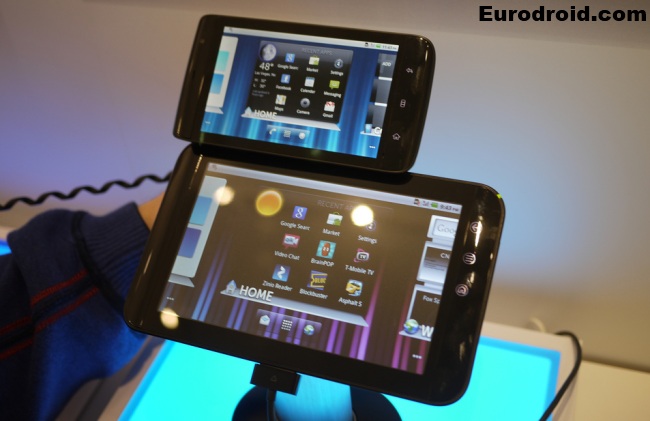
Dell’s 5-inch Streak failed to capture much interest when it hit AT&T last year, but the PC manufacturer isn’t done yet. At CES, it unveiled 7 and 10-inch models of the Streak. Both devices have three physical buttons on the bottom, and are 4G capable on T-Mobile. The Streaks currently run Android 2.2 on a 1GHz Nvidia Tegra 2 dual-core processor, and have 16GB of internal storage. The rear camera is 5MP, but the front-facing camera is a bit weaker than some of the higher-end tablets at only 1.3MP. It will come preloaded with some unique apps, including T-Mobile TV, BrainPOP, Zinio, Qik Video Chat, Blockbuster, Kindle, Slacker Radio, and Zoodles. Click here to learn more.

Dell Inspiron Duo

dell-inspiron-duo-tablet-pc-with-touch

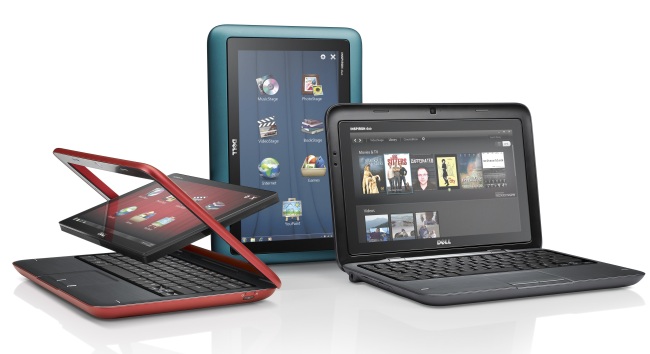
The Streak is Dell’s stab at a tablet, but you may be asking what the PC maker has up its sleeve to capitalize on the dozens of people who can’t decide whether they want to buy a tablet or netbook. The answer is the Dell Inspiron Duo. This fine little lappy has a rotating 10.1-inch screen, effectively morphing it from a small, netbook to a very fat touch tablet. And since it runs Windows 7, it won’t be a very good tablet either. Worse, its webcam appears to be embedded inside the PC frame, making it impossible to stare at your own face while touching your tablet.